Transport Program• Updated: April 26, 2026

CM Punjab Bike Scheme 2026 – Complete Guide to Apply Online, Eligibility, Registration, Installments & Latest Updates

Are you a student in Punjab, tired of spending half your allowance on van fare or rickshaw rides? You've probably heard that the government is giving out bikes on installments. But here's the problem. Most of what you'll find online about the CM Punjab Bike Scheme 2026 is a messy mix of old Phase 1 rules, half-confirmed news, and guesses from content mills just trying to fill a page.

This guide is different. We checked every figure below against the Punjab Government's own portal (punjab.gov.pk), the Punjab Information Technology Board (PITB), the scheme's live portal (bikes.punjab.gov.pk), and trusted Pakistani news reports. If the government hasn't confirmed something yet, we say so plainly. And right now, there's one big update that falls in that category.

This program goes by several names — "CM Punjab Bike Scheme," "CM Punjab e-Bike Scheme," "Chief Minister's Youth Initiative," and "Maryam Nawaz Bike Scheme." They all mean the same thing. This guide uses "CM Punjab Bike Scheme" throughout, and notes it clearly whenever a source uses a different name.
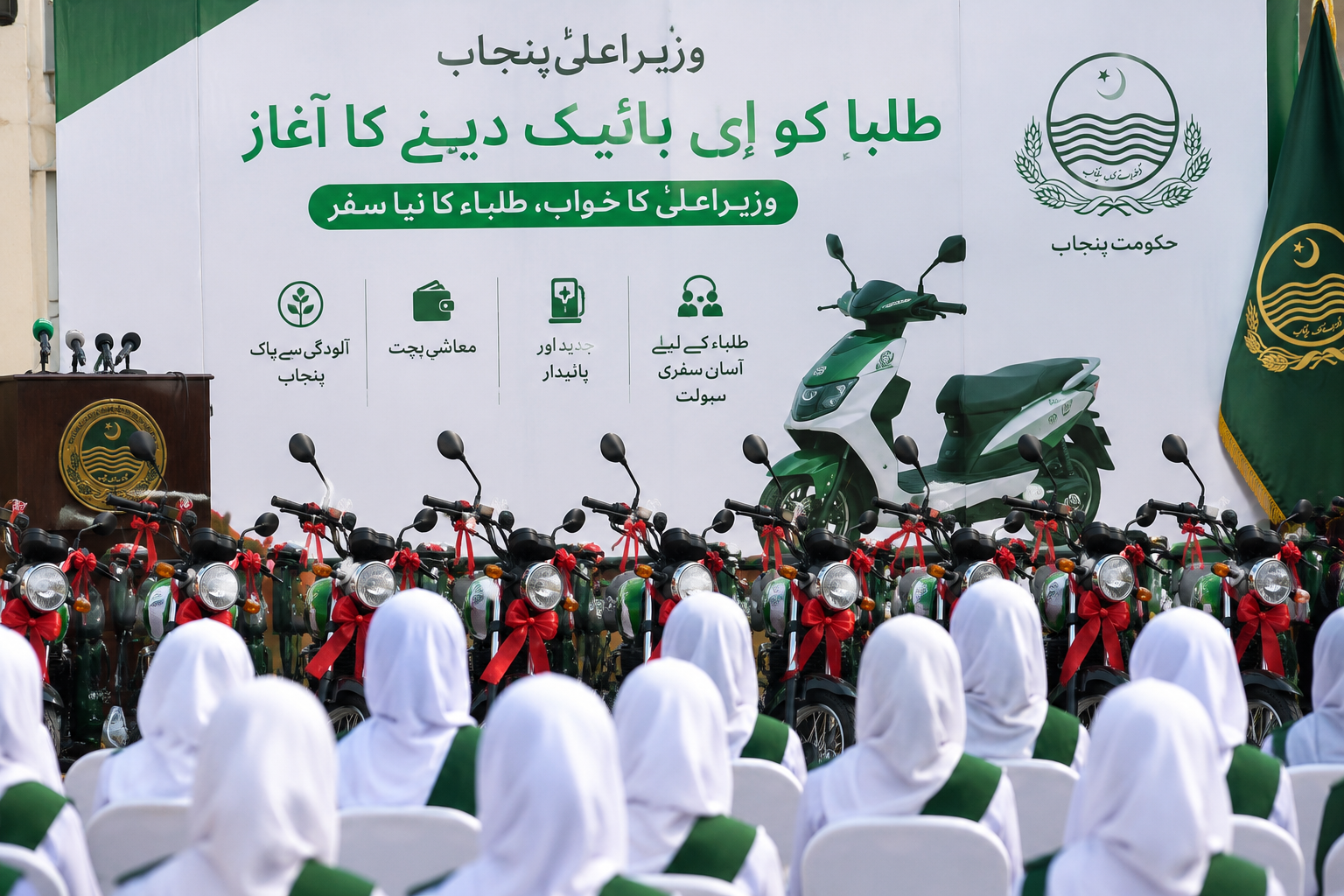
CM Punjab Bike Scheme 2026 – Complete Guide to Apply Online, Eligibility, Registration, Installments & Latest Updates hero graphic
Status

Active

Deadline

Not Yet Announced (2026 Phase)

Benefit

Rs. 70,000 govt. subsidy per bike (interest-free)

Monthly Benefit

Rs. 2,000–2,100/month installment (reported)

Approved Applications

20,000 (Phase 1–2, completed) — 100,000 targeted under 2026 expansion

Phase

Phase 1–2 Completed; New 2026 Expansion Approved (Registration Not Open) – Registration for the new 100,000-bike phase not yet opened (as of July 21, 2026)

Authority

Government of Punjab, Pakistan

ℹ️
Independent Informational Guide: This portal is a private, independent educational resource and is not affiliated with, authorized, or endorsed by the official Government of Punjab, Pakistan or any other government agency. Official registration links and portals are provided directly in our guides for reference.

What is CM Punjab Bike Scheme 2026 – Complete Guide to Apply Online, Eligibility, Registration, Installments & Latest Updates?

The CM Punjab Bike Scheme is a Government of Punjab initiative. It helps enrolled students buy a motorcycle — petrol or electric — through interest-free installments. The provincial government pays the loan markup and part of the down payment. The official Punjab Government portal lists it as a Flagship Project. Two partners run it: the Bank of Punjab (BOP) handles financing, and the Punjab Information Technology Board (PITB) built and runs the digital registration and balloting system.

The idea behind it is simple. For many Punjab college and university students, the daily commute is one of the biggest drains on family budgets. Vans, rickshaws, and shared cabs add up fast. Routes to campus aren't always reliable either. A subsidized, interest-free bike removes that recurring cost. It also gives students control over their own schedule.

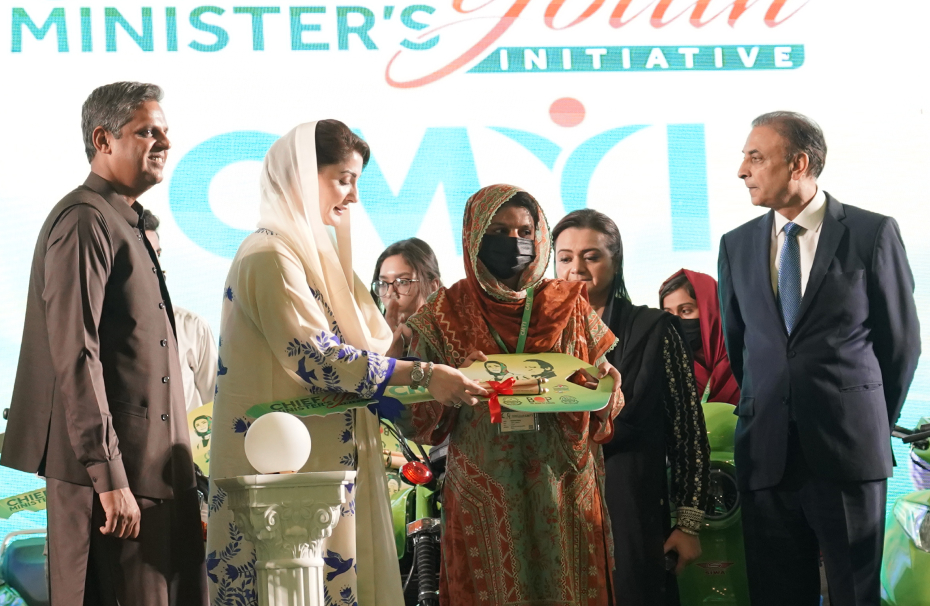
The scheme formally launched on April 16, 2024, under the name "Chief Minister Punjab Youth Initiative." The target: 20,000 bikes for regular students in HEC-recognized degree programs across Punjab. The Express Tribune covered the launch event. There, the Chief Minister handed the symbolic key of the first motorbike to a college student in Jampur. That detail matters if you're wondering whether this is a brand-new 2026 program. It isn't. It has run, grown, and changed for over two years, and 2026 marks its biggest expansion yet.

A detail most guides miss: in the original Phase 1 rollout, the scheme was mostly a petrol bike program. 19,000 of the 20,000 bikes were petrol motorcycles. Only 1,000 were electric. These figures come straight from the scheme's own portal. So why does 2026 news focus so heavily on electric bikes? Because the new expansion phase is 100,000 electric bikes only. That's a real strategic shift, not just a rebrand.

Important: Applicants must ensure their CNIC is not expired before applying. Verify your CNIC status at nadra.gov.pk before submitting your application.

Latest Update Box — July 21, 2026

On June 29, 2026, Chief Minister Maryam Nawaz Sharif approved a big relaunch of the e-bike scheme. This happened during a Punjab Transport & Mass Transit Department meeting. The government will give out 100,000 electric bikes to students over the next year. Each bike carries a Rs. 70,000 government subsidy. Male applicants will likely pay a down payment of about Rs. 14,000–15,000, plus a monthly installment near Rs. 2,000–2,100 (interest-free). Female applicants will have their down payment and registration fee waived. The Nation first reported this. Daily Ausaf, Pakistan Observer, and other outlets confirmed it.

Confirmed: The Chief Minister repeated this 100,000 e-bike promise on July 16–17, 2026. This happened at a ceremony in Arifwala, alongside a wider education package (Nawaz Sharif Schools of Eminence, 100,000 laptops, and 50,000 merit scholarships).

⏳ Awaiting official confirmation: As of this writing, the exact start date, deadline, and portal link for this new 100,000-bike phase are not yet announced. Several independent trackers confirm the same gap. Do not pay any "agent," WhatsApp contact, or outside website that claims it can register you early. The scheme has always been 100% free. It has always run only through the official government portal.

What to do right now: Get your CNIC/B-Form, Punjab domicile certificate, proof of enrollment, and driving license or learner's permit ready. Check bikes.punjab.gov.pk and punjab.gov.pk/cm-ebikes-scheme every few days. We'll update this guide the moment the portal opens.

Quick Summary Table

AspectDetails
Official NameChief Minister's e-Bikes Scheme / CM Punjab Bike Scheme (launched as "CM Punjab Youth Initiative")
Originally LaunchedApril 16, 2024
Latest Expansion ApprovedJune 29, 2026
Administered ByPunjab Information Technology Board (portal & balloting), Bank of Punjab (financing), Transport & Mass Transit Department
Who Qualifies (core criterion)Regular students, 18+, enrolled in an HEC-recognized degree college or university, with a valid driving license or learner's permit
Bike TypesPetrol Bikes (P-Bikes) and Electric Bikes (E-Bikes) — you can select only one
Original Scheme Scale20,000 bikes (Phase 1 split: 19,000 petrol + 1,000 electric)
Newly Announced Scale (2026)100,000 electric bikes over one year
Cost to Female ApplicantsDown payment and registration fee waived by government
Cost to Male ApplicantsRoughly Rs. 14,000–15,000 down payment + ~Rs. 2,000–2,100/month (new phase, unconfirmed final terms)
Interest/Markup0% — fully paid by the Punjab Government
Selection MethodComputerized e-balloting (PITB), triggered when applications exceed quota
Application Mode100% online — no offline/manual submission accepted
Application FeeNone. Free of cost.
Official Portalbikes.punjab.gov.pk
Official BOP Helpline042-111-333-267
Next Registration WindowNot yet announced (as of July 21, 2026)

Is this the same as the federal PM e-bike scheme?

No. Mixing these up is one of the most common sources of confusion online. The CM Punjab Bike Scheme is a provincial program. The Government of Punjab runs it through the Bank of Punjab. There's a separate federal program too. Prime Minister Shehbaz Sharif approved it on April 23, 2026. It offers electric bikes on installments, but only to federal government employees up to BPS-16. A third program exists as well: PAVE (Pakistan Accelerated Vehicle Electrification Programme) at pave.gov.pk, a national EV subsidy platform under the federal New Energy Vehicle Policy 2025–30. Three schemes. Three different portals. This guide covers only the provincial CM Punjab scheme for students.

Latest Updates 2026

Here's the confirmed timeline, oldest to newest. Anything without a firm citation is explicitly marked as unconfirmed rather than presented as fact.
DateUpdateStatus
April 16, 2024Scheme formally launched as "CM Punjab Youth Initiative"; PITB portal (bikes.punjab.gov.pk) goes live; target set at 20,000 bikes✅ Confirmed (PITB)
2024–2025Phase 1 rollout: E-Bikes limited to students studying in 5 cities (Lahore, Rawalpindi, Faisalabad, Multan, Bahawalpur); Petrol Bikes distributed district-wide by Population Census 2023✅ Confirmed (official portal)
Phase 1 Allocation19,000 Petrol Bikes (11,676 male / 7,324 female) + 1,000 E-Bikes (700 male / 300 female); total Phase 1 subsidy ≈ Rs. 1 billion✅ Confirmed (bikes.punjab.gov.pk)
June 10, 2025Phase 2 application deadline closed; eligibility widened beyond the original 5 cities to students across more districts✅ Widely reported
April 2026Separate teacher track opens via the Punjab Teachers Foundation portal (ptf.punjab.gov.pk), under the School Education Department✅ Reported
April 23, 2026Federal government (not this scheme) approves e-bikes on installments for federal employees up to BPS-16✅ Confirmed, but a separate scheme
June 29, 2026CM Maryam Nawaz approves relaunch/expansion: 100,000 electric bikes over one year, Rs. 70,000 subsidy per bike✅ Confirmed (The Nation, Daily Ausaf, Pakistan Observer)
July 16–17, 2026Expansion reiterated at Arifwala ceremony alongside a wider education package✅ Confirmed (Daily Pakistan, BOL News, ARY News)
July 21, 2026 (today)Registration portal, exact eligibility rules, and last date for the new 100,000-bike phase not yet announced⏳ Pending official confirmati

Objectives of the CM Punjab Bike Scheme

The government frames this initiative around five connected goals:

  • Student transportation. Cut the time and money students lose to unreliable public transport, especially those commuting from outside city centers.
  • Affordable mobility. Replace a recurring daily fare with a fixed, subsidized, interest-free monthly installment that's easier for families to budget around.
  • Green transport. Push adoption of electric bikes as part of Punjab's broader environmental strategy, which also includes electric buses now being rolled out in cities like Kot Addu, Talagang, Taunsa Sharif, Vehari, and Lodhran.
  • Education support. Reduce the transport-cost barrier that causes some students — particularly from lower-income or rural households — to skip classes, arrive late, or drop out entirely.
  • Women's empowerment. Give female students an independent, safe mode of transport, and under the new phase, remove the down payment and registration fee entirely for female applicants.

Key Features Table

FeatureDetails
Target GroupRegular students enrolled in HEC-recognized degree colleges/universities in Punjab (18+); separate tracks exist for government school teachers via PTF and provincial employees (BPS 1–16)
Bike TypesPetrol Bikes (P-Bikes) and Electric Bikes (E-Bikes); scooter/scootie variants available for female applicants
Installment PlanInterest-free monthly installments through the Bank of Punjab, typically spread over 24 months under the original scheme
Government SubsidyFull loan markup paid by government; Rs. 20,000 contribution toward down payment under the original scheme; Rs. 70,000 per-bike subsidy announced under the new 2026 electric-only expansion
Bank PartnerBank of Punjab (BOP) — handles verification, disbursement, and installment collection
Registration Mode100% online via bikes.punjab.gov.pk; no walk-in or paper applications accepted
Selection MethodComputerized e-balloting conducted by PITB when applications exceed the available quota
Application CostFree — no processing fee at any stage

Types of Bikes Available

Applicants choose one of two categories — you cannot register for both. Petrol Bikes vs. Electric Bikes
FactorPetrol Bike (P-Bike)Electric Bike (E-Bike)
Availability under original scheme (Phase 1)District-wide, based on Punjab domicileLimited to students studying in Lahore, Rawalpindi, Faisalabad, Multan, or Bahawalpur
Availability under 2026 expansionNot part of the new 100,000-bike phase (which is electric-only)Primary focus of the new expansion
Fuel/Charging CostTied to volatile petrol pricesTied to household electricity tariff (also variable, but generally lower per km)
Refueling/Recharging Time1–2 minutes at any petrol stationSeveral hours on a home charger (station network still limited in most cities)
Routine MaintenanceRegular oil changes, spark plugs, filtersFewer moving parts; main long-term cost is eventual battery health/replacement
Noise & EmissionsCombustion engine noise and exhaust emissionsNear-silent, zero tailpipe emissions
Resale FamiliarityWell-established secondhand marketStill a developing secondhand market in Pakistan
Best Suited ForLonger routes, areas without reliable charging accessShorter urban/campus commutes with home charging access

Advantages of Each

Petrol Bikes

  • Instant refueling anywhere in Punjab, including smaller towns
  • Familiar to most families for servicing and spare parts
  • No dependence on electricity supply, which still fluctuates in some areas

Electric Bikes

  • Dramatically lower running cost per kilometer
  • No engine noise, no tailpipe pollution — a genuine fit for the scheme's "green transport" objective
  • Simpler mechanically, which can mean less frequent servicing

Running Cost Comparison (Illustrative)

This is a real-world cost illustration, not an official scheme figure — treat it as a planning estimate, not a guarantee.

As of July 21, 2026, petrol in Pakistan is priced at Rs. 315.80 per litre following an OGRA notification (prices are now revised on a rolling basis, so check the current rate before budgeting). A typical 70cc commuter bike of the type distributed under this scheme returns roughly 45–55 km per litre, which works out to roughly Rs. 6–7 per kilometer in fuel cost alone.

Electric running cost depends heavily on your household's electricity slab and DISCO (LESCO, FESCO, MEPCO, etc.), which vary and change with periodic fuel-cost adjustments — so we won't quote a single rupee figure as fact. As a rough planning guide only: a small e-bike battery typically consumes somewhere in the range of 1.5–2 units of electricity per 100 km, which — even at a mid-tier residential rate — tends to land meaningfully below Rs. 2 per kilometer for most households. Check your own DISCO's current per-unit rate for an accurate figure, since Pakistan's electricity pricing is tiered and adjusted frequently.

Maintenance

TaskPetrol BikeElectric Bike
Engine oil changeEvery ~1,000–1,500 kmNot applicable
Spark plug/filter servicePeriodicNot applicable
Battery health checkN/A (standard 12V battery only)Periodic — main long-term cost driver
Brake, tyre, chain upkeepStandard for bothStandard for both
Estimated annual service visitsMore frequentFewer, but budget for eventual battery servicing

Eligibility Criteria

The eligibility rules below are confirmed for the original/ongoing scheme via the official Punjab Government page (punjab.gov.pk/cm-ebikes-scheme). Where the new 2026 expansion reportedly adds or changes a condition, it's marked separately — these newer details come from news coverage of the June 29, 2026 announcement rather than a published, official eligibility notification, so treat them as "reported" until the portal confirms them.
CriterionRequirementSource Status
AgeAt least 18 years old✅ Official (no stated upper limit for the core student category; some news reports mention a broader "up to 35" range for wider youth/employee categories — confirm which applies to your case)
ResidencePunjab domicile generally required; for E-Bikes under Phase 1, students studying (not necessarily domiciled) in one of the five original cities also qualified✅ Official, with a documented exception
EducationMust be a regular student — not enrolled through distance/open learning✅ Official
EnrollmentEnrolled in a degree program at a public or private college/university✅ Official
HEC RecognitionInstitution must be recognized by the Higher Education Commission (HEC)✅ Official
Driving License / Learner PermitMust hold a valid motorcycle driving license or a learner's permit (either is accepted)✅ Official
Vehicle OwnershipShould not already own a registered motor vehicle⏳ Reported (2026 expansion coverage)
One Per FamilyOnly one applicant per family/household, even if multiple siblings qualify⏳ Reported (2026 expansion coverage)
Prior Scheme BenefitShould not have already received a vehicle through another federal or provincial youth scheme⏳ Reported (2026 expansion coverage)
Credit HistoryApplicants with a blacklisted or poor guarantor/credit history may be disqualified during BOP verification⏳ Reported
Bike Type ChoiceYou may apply for a Petrol Bike or an Electric Bike — not both✅ Official
Regular student" is doing a lot of work in this eligibility list. Your institution — not the portal — verifies your bonafide student status before your application proceeds, so make sure your enrollment record is current and accurate with your college or university's admin office before you apply.

Required Documents

Gather these before you start your application — most rejections at the document stage happen because of a mismatch between the CNIC and enrollment record, not because a document is missing entirely.

  • CNIC (18+) or B-Form (for applicants without a CNIC yet)
  • Student/College ID Card
  • Admission Letter or Proof of Enrollment (fee receipt, enrollment certificate, or semester registration slip)
  • Punjab Domicile Certificate
  • Driving License or Learner's Permit (motorcycle category)
  • Recent Passport-Size Photograph (clear background, per portal's photo specifications)
  • Income documents — based on the information we could verify, this scheme is not income-tested; eligibility is based on enrollment, age, and residency rather than household income. Unlike some other Punjab welfare programs, we found no official requirement for income certificates. If the new 2026 phase introduces one, we'll update this guide.

Tip: Scan or photograph every document in advance and keep file sizes small (most government portals cap uploads at 1–2MB per file). A document upload failure due to file size is one of the most common — and most avoidable — reasons applications stall.

How to Apply Online

The scheme is 100% digital. Here's the general application flow based on the portal's own published process. (We'll update the exact screens and field names the moment the new 2026 registration window opens — some interface details may shift with the relaunch.)

  1. Visit the official portal at bikes.punjab.gov.pk.
  2. Register an account using your CNIC/B-Form number and an active mobile number; you'll typically verify this with an OTP (one-time password) sent via SMS.
  3. Fill in your personal details — name, date of birth, domicile district, and contact information.
  4. Fill in your educational details — institution name, degree program, semester/year, and enrollment number.
  5. Upload the required documents listed above, in the accepted file format and size.
  6. Select your bike category — Petrol or Electric — and, where applicable, your preferred model from the approved list.
  7. Review your application carefully. Cross-check spellings against your CNIC exactly; mismatches are a leading cause of rejection.
  8. Submit the application and note down your application/tracking ID — you'll need this to check your status later.
  9. Institutional verification. Your college or university confirms your bonafide student status to the portal.
  10. Wait for e-balloting (only triggered if applications exceed the available quota in your category/district).
  11. Bank of Punjab verification. If selected, BOP verifies your documents and processes your financing file.
  12. Selection notification. You'll be notified via SMS and/or the portal dashboard.
  13. Sign the facility agreement and pay your share of the down payment, if applicable to your category.
  14. Bike delivery, arranged through an authorized dealer, with insurance included in the financing package.

Important: Never share your CNIC, OTP, or documents with anyone claiming they can "fast-track" your application for a fee. The scheme has no paid tier, no agents, and no shortcut. All legitimate communication comes through the official portal or the BOP helpline.

How to Apply Offline

There is no offline option. The scheme's own FAQ content is explicit on this point: applications can only be submitted online through the official web portal — there is no manual, walk-in, or paper-based submission process at any government office. If someone tells you otherwise, treat it as a red flag.

Registration Process Flow

STEP 1 → Visit Official Portal (bikes.punjab.gov.pk)

STEP 2 → Create Account (CNIC/B-Form + Mobile OTP Verification)

STEP 3 → Enter Personal & Educational Details

STEP 4 → Upload Required Documents

STEP 5 → Select Bike Type — Petrol OR Electric (choose one)

STEP 6 → Submit Application → Receive Tracking/Application ID

STEP 7 → Institution Verifies Bonafide Student Status

STEP 8 → Computerized E-Balloting by PITB (if applications exceed quota)

STEP 9 → Bank of Punjab Verification (documents, guarantor, eligibility)

STEP 10 → SMS / Portal Notification of Selection Result

STEP 11 → Sign Facility Agreement + Pay Your Share of Down Payment

STEP 12 → Bike Delivered via Authorized Dealer (insurance included)

STEP 13 → Interest-Free Monthly Installments Begin via Bank of Punjab

Installment Details

ComponentOriginal Scheme (2024–2025)New 2026 Expansion (Electric-Only)
Total required equity/down payment≈ Rs. 45,000Not fully detailed yet
Government's contribution to down paymentRs. 20,000Full down payment waived for female applicants
Applicant's share (male)≈ Rs. 25,000 (original scheme)≈ Rs. 14,000–15,000 (reported)
Applicant's share (female)Same structure as male in original scheme's published FAQDown payment and registration fee waived (reported)
Monthly installmentReported in the Rs. 2,000–4,000 range depending on bike type≈ Rs. 2,000–2,100/month (reported)
Markup/Interest0% — fully paid by the Punjab Government0% — fully paid by the Punjab Government
Government subsidy per bikePart of a Phase 1 total subsidy pool of ≈ Rs. 1 billionRs. 70,000 per electric bike
Financing partnerBank of PunjabBank of Punjab (expected — not yet formally confirmed for this specific phase)
Early payoffPermitted, in consultation with BOPNot yet detailed
The original scheme's numbers come from the portal's own FAQ content and are stable. The 2026 expansion column reflects consistent reporting from The Nation, Pakistan Observer, and Daily Ausaf on the June 29 announcement — but the government has not yet published a full, itemized installment schedule for this new phase. Final terms could shift slightly once the portal opens. We'll update this table immediately when that happens.

How the financing actually works

The Bank of Punjab pays for the bike upfront. The Punjab Government then pays the entire markup (interest) for you. So your monthly installment goes only toward the bike's cost, not toward bank profit. Insurance comes bundled into the deal. Want to close your loan early? The scheme's FAQ says yes, in consultation with BOP. We couldn't confirm whether an early-payoff penalty applies, so ask BOP directly if that matters to you.

Selection Process

Selection isn't first-come-first-served. And based on what we could verify, it isn't merit-based either. (Compare that to the CM Punjab Laptop Scheme, which does use a minimum-marks cutoff.) Here's the real sequence:

  1. Verification. Your college or university confirms you're a genuine, currently enrolled regular student.
  2. Eligibility checking. The portal checks your age, domicile, HEC-recognition status, and license/permit details against the scheme's rules.
  3. Quota mapping. Your application is mapped against the quota for your district (petrol bikes) or study-city (electric bikes, under Phase 1 rules) and gender category.
  4. Computerized e-balloting. If applications in your category/district exceed the quota, PITB runs a computerized, randomized ballot. This is the step most applicants misunderstand — it is not a merit list based on grades.
  5. Approval. Balloted (or, where no balloting was needed, directly qualifying) applicants move to Bank of Punjab verification.
  6. Distribution. Approved applicants sign the facility agreement, pay their share of the down payment, and receive their bike through an authorized dealer.

Important Note: We found no official evidence of an academic-merit component (like a minimum GPA or percentage) in this scheme's selection criteria. If you've seen a claim that grades affect your balloting odds, treat it as unverified — it does not appear in the scheme's own published FAQ content.

Female Student Quota

Female mobility is one of the scheme's stated priorities, and it shows up in two distinct ways across the program's history. Under the original scheme: The official Punjab Government page describes an "equal quota for male and female students at the divisional level." However, the actual Phase 1 allocation numbers published on the scheme's own portal show a different split in practice:
Bike TypeMaleFemaleFemale Share
Electric Bikes70030030%
Petrol Bikes11,6767,32438.5%
We're showing both facts side by side on purpose. There's a real gap between the "equal quota" policy and the published Phase 1 numbers. We won't guess why. We'd rather show you the real figures than smooth them over. What female applicants get either way: Eligibility for both Petrol and Electric bike categories A choice between scootie and standard motorbike body styles Under the new 2026 expansion, the government covers the down payment and registration fee entirely for female applicants — a meaningfully bigger benefit than the original scheme's equal-subsidy structure

Reserved Categories

Based on everything we could verify, the scheme's primary "reserved category" mechanism is the gender-based quota described above. We could not find official confirmation of a dedicated disability quota, minority quota, or other reserved-category carve-out specific to this bike scheme, unlike some other Punjab welfare programs that do publish such provisions.

If you belong to a category you believe should receive special consideration, the responsible move is to contact the BOP helpline or check the portal directly at application time rather than rely on this (or any other) guide — we'd rather tell you plainly that we couldn't verify this than guess.

District-wise Distribution

ElementConfirmed Detail
Petrol Bike allocation methodDistrict-wide, weighted by each district's population under the 2023 Population Census
Electric Bike availability (Phase 1)Limited to students studying in five cities: Lahore, Rawalpindi, Faisalabad, Multan, and Bahawalpur
Non-domicile studentsStudents without Punjab domicile could still apply for E-Bikes under Phase 1 if they were studying at an institution in one of the five listed cities
New 2026 phase district rulesNot yet published in detail; reported coverage mentions population-weighted distribution "to give northern and southern Punjab equal chance," similar in spirit to the original method, but we could not confirm an exact per-district figure
Element Confirmed Detail Petrol Bike allocation method District-wide, weighted by each district's population under the 2023 Population Census Electric Bike availability (Phase 1) Limited to students studying in five cities: Lahore, Rawalpindi, Faisalabad, Multan, and Bahawalpur Non-domicile students Students without Punjab domicile could still apply for E-Bikes under Phase 1 if they were studying at an institution in one of the five listed cities New 2026 phase district rules Not yet published in detail; reported coverage mentions population-weighted distribution "to give northern and southern Punjab equal chance," similar in spirit to the original method, but we could not confirm an exact per-district figure

Delivery Process

Once you're approved, here's what happens, based on the scheme's published financing structure:

  1. Facility agreement signed. You formally agree to the installment terms with Bank of Punjab.
  2. Down payment/equity paid. You pay your share (the government's contribution is applied automatically).
  3. Dealer allocation. BOP coordinates with an authorized dealer network to allocate your specific bike.
  4. Insurance activation. Insurance is bundled into your financing package before delivery.
  5. Physical handover. You collect your bike from the authorized dealer (specific pickup locations/dates are communicated via the portal and SMS).
  6. Installments begin. Your interest-free monthly installment schedule with BOP starts per your signed agreement.

We could not verify an exact average turnaround time between approval and physical delivery from an official source — reported timelines vary, so treat any specific "X weeks" claim you see elsewhere with caution.

Application Status Check

  1. Go to bikes.punjab.gov.pk.
  2. Log in using the credentials you created during registration (typically CNIC + password, or CNIC + OTP).
  3. Navigate to your application/dashboard section.
  4. Enter your tracking/application ID if prompted.
  5. Your current stage should display — for example, "Under Institution Verification," "Balloting Pending," "Approved — BOP Verification," or "Rejected" (exact status labels may vary; we're describing the general logic rather than quoting exact interface text we haven't personally verified for the current portal build).
  6. If your status hasn't changed in an unusually long time, contact the BOP helpline (042-111-333-267) with your tracking ID ready rather than resubmitting a new application.

Benefits

For Students

  • Independent, on-demand transport that doesn't depend on van/rickshaw schedules
  • Meaningful monthly savings compared to daily fare costs
  • More reliable, punctual attendance
  • Financial inclusion — many students build their first-ever bank relationship through BOP as part of this process

For Parents

  • Removes a recurring household expense
  • Reduces safety concerns tied to unreliable or crowded public transport, especially for daughters commuting alone
  • Predictable, fixed monthly cost instead of fluctuating daily fares

For the Environment

  • Electric bikes produce zero tailpipe emissions, supporting Punjab's broader clean-transport push (which also includes new electric bus routes)
  • Lower particulate and noise pollution in dense urban student corridors

For the Economy

  • Increased activity for authorized bike dealers and after-sales service networks
  • Expands Bank of Punjab's retail lending relationships with young, first-time borrowers
  • Supports Pakistan's shift toward domestic EV assembly and adoption under the wider New Energy Vehicle Policy 2025–30

For Education

  • Reduces one of the concrete, practical barriers behind absenteeism and dropout — unreliable or unaffordable transport
  • Frees up study time otherwise lost to long, multi-leg commutes

Common Problems & How to Solve Them

ProblemLikely CauseWhat To Do
Portal not loading / downHigh traffic during registration windows, or maintenanceTry off-peak hours (early morning); avoid third-party "mirror" sites entirely
OTP not receivedNetwork delay, incorrect number entered, SIM registered to someone elseDouble-check the number entered; wait a few minutes before requesting a resend; ensure the SIM is registered in your own name where required
Document rejectedFile too large, wrong format, mismatched detailsRe-scan at a smaller file size; confirm the document matches your CNIC exactly; use PDF/JPEG as specified by the portal
Verification stuck "pending"Institution hasn't confirmed your bonafide status yetFollow up directly with your college/university admin office — this step depends on them, not just you
Installment payment issuesBank processing delay, incorrect account linkageContact the BOP helpline directly with your tracking/loan reference number
Wrong information submittedData entry error during registrationCheck whether the portal allows in-application edits before final submission; if not, contact the helpline immediately — don't submit a duplicate application, which can cause its own complications

Expert Tips to Improve Your Chances

  1. Apply the moment registration opens — don't wait for the deadline. Early applications avoid last-minute portal congestion and give your institution more time to complete verification before balloting.
  2. Match your CNIC exactly. Your name, father's name, and date of birth should be entered exactly as they appear on your CNIC/B-Form — down to spacing and spelling.
  3. Chase your institution's verification proactively. This step depends on your college/university admin office, not just you. A quick follow-up email or visit can prevent weeks of "pending" status.
  4. Keep scans small and clean. Compress photos/PDFs before upload; blurry or oversized files are a top cause of document rejection.
  5. Decide your bike type before you start. Petrol vs. electric availability depends on your city/district — check which category you actually qualify for before filling the form.
  6. Use a mobile number registered in your own name for OTP verification to avoid delivery or ownership-mismatch issues.
  7. Screenshot and save your tracking ID the moment you submit — you'll need it for every status check and helpline call.
  8. Never pay anyone. No legitimate step in this process — application, verification, balloting, or delivery — requires a payment to a third party, agent, or "facilitator."
  9. Double-check your domicile certificate's validity. An expired domicile document is an easy, avoidable rejection reason.
  10. Bookmark the official portal directly rather than relying on search results, which can surface outdated or third-party pages during high-traffic periods.

Frequently Asked Questions (FAQs)

Share your thoughts about this scheme

Share your opinion, ask a question, or leave feedback about this page.

Recent Comments

Loading comments...

Related Schemes

Other Transport programs you may qualify for

CM Punjab Bike Scheme Apply Online 2026Active
PUNJAB
Transport

CM Punjab Bike Scheme Apply Online 2026

Subsidized motorcycle assistance for eligible Punjab residents with online registration and status tracking....

View Details
CM Punjab Bike Scheme 2025Closed
PUNJAB
Transport

CM Punjab Bike Scheme 2025

The CM Punjab Bike Scheme 2025 previously offered motorcycle support. This page is now closed and points applicants to t...

View Details
T-Cash Card (Transport Subsidy)500K+
PUNJAB
Transport

T-Cash Card (Transport Subsidy)

Subsidized public transport credits for students and low-income families via T-Cash card....

View Details
Free Metro Bus Passes
PUNJAB
Transport

Free Metro Bus Passes

Free or subsidized metro bus passes for eligible citizens and students....

View Details

Don't Miss the Application Deadline

Check the deadline for this scheme and track all application deadlines →

View Deadline Tracker