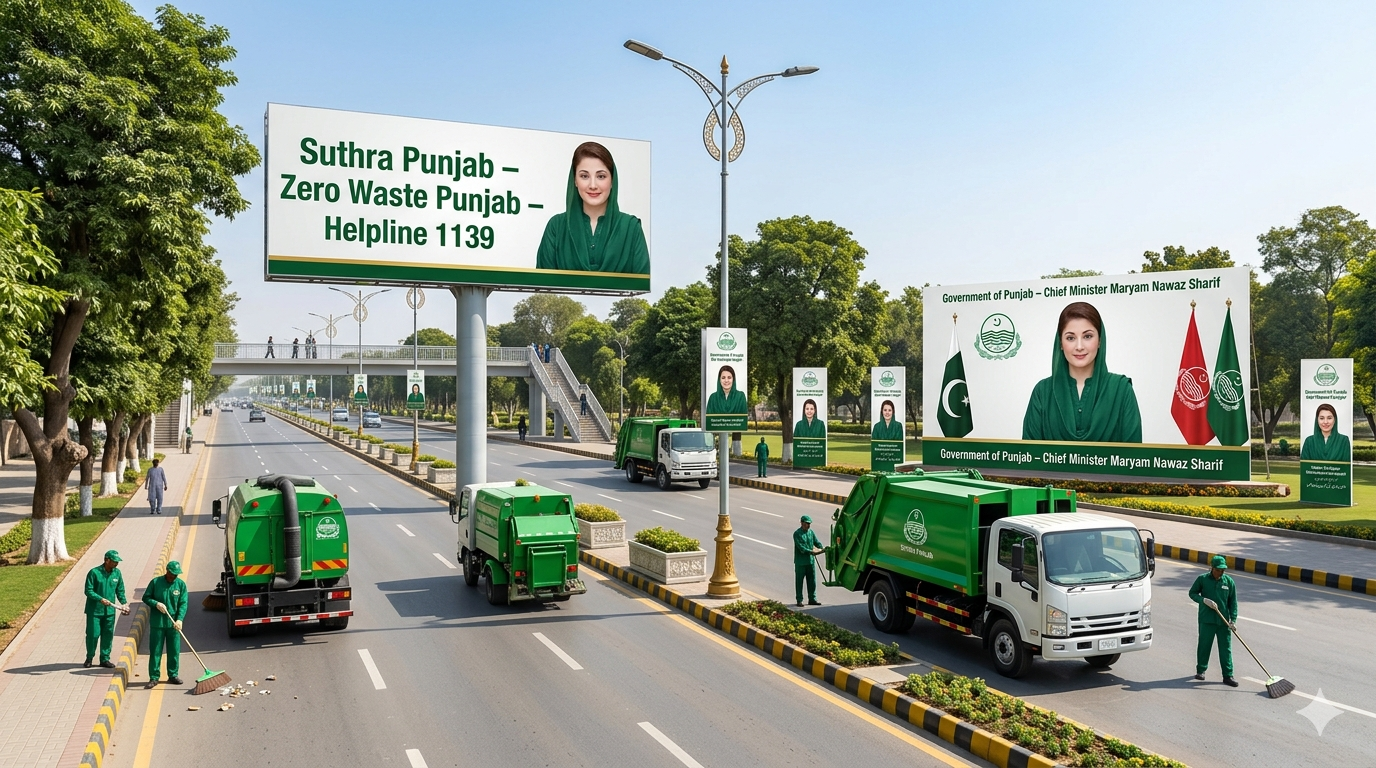
The importance of a clean environment is not just about aesthetics — it has direct, measurable impact on public health, the economy, and daily quality of life. Here is why the Suthra Punjab Program is one of the most consequential government initiatives in Punjab today:
Public Health Impact
Unmanaged garbage and blocked drains are the primary breeding grounds for mosquitoes, bacteria, and waterborne diseases. By systematically removing waste and cleaning drains, Suthra Punjab directly reduces the risk of dengue fever, typhoid, hepatitis, and cholera — illnesses that have historically cost Punjab billions of rupees in healthcare costs every year.
Economic Benefits
A cleaner Punjab attracts more domestic and foreign tourism, increases property values in sanitation-compliant areas, and reduces the indirect cost of disease on the workforce. The 150,000+ jobs created also inject significant income into lower-income communities who make up the bulk of the sanitation workforce.
Environmental Sustainability
Pakistan is among the countries most vulnerable to climate change. Proper waste management, drain maintenance, and the introduction of recycling under Suthra Punjab contribute directly to reducing pollution in rivers, groundwater, and agricultural land — protecting the long-term sustainability of Punjab's farming economy.
Digital Accountability
By building a GPS-monitored, AI-assisted, app-integrated complaint system, the Punjab government has created something rare in Pakistan's civic governance history: a sanitation service that can be held accountable by the very people it serves. Every citizen with a smartphone or a SIM card now has a direct line — 1139 — to report failures and demand action.